
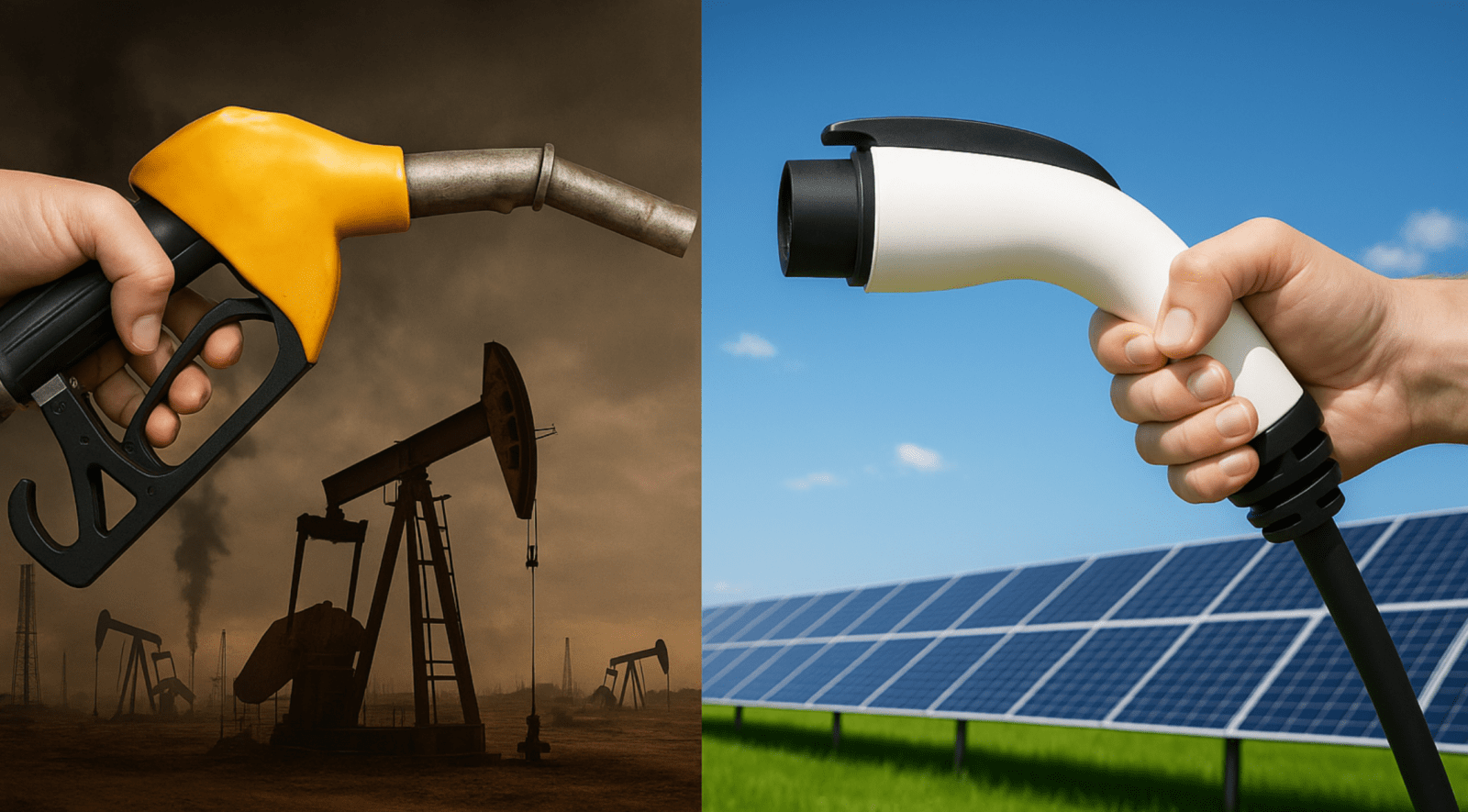
Rep. Greg Landsman (D-OH) wants to bring back the federal EV tax credit and double it. His new bill, the “21st Century Vehicle Choice Act” (H.R. 10881), would offer up to $15,000 on a new electric vehicle and $8,000 on a used one, and it would make both credits permanent.
The problem is that the bill has virtually no chance of becoming law anytime soon. And if EV shoppers start holding out for it, it could end up hurting the market it’s trying to help.
What’s in the bill
Landsman introduced H.R. 10881 on October 22. It was referred to three House committees (Ways and Means, Energy and Commerce, and Natural Resources), and as of today, it doesn’t have a single cosponsor.
The big change is to the new clean vehicle credit, Section 30D of the tax code. Under the Inflation Reduction Act, the $7,500 credit came in two $3,750 halves: one for meeting critical mineral sourcing requirements and one for battery components. Landsman’s bill doubles each half to $7,500, for a maximum of $15,000.
It also deletes the termination dates. The One Big Beautiful Bill Act killed the new and used EV credits for vehicles acquired after September 30, 2025, and the home charger credit after June 30, 2026. Striking those dates would revive all three credits with no expiration.
Here are the other changes:
- The used EV credit goes from $4,000 or 30% of the sale price (whichever is lower) to $8,000 or 60%.
- The charging equipment credit goes from 30% to 50% of the cost.
- The income caps on the new EV credit drop by 25%: $225,000 for joint filers (from $300,000), $169,000 for heads of household (from $225,000), and $112,500 for single filers (from $150,000).
- It’s once per taxpayer. Anyone who was allowed the 30D credit in any previous tax year gets $0. As written, that isn’t limited to credits claimed after the bill passes, so everyone who used the credit between 2023 and 2025 would be shut out.
The bill doesn’t touch the rest of 30D. North American final assembly, the $55,000 MSRP cap on cars and $80,000 cap on SUVs, pickups, and vans, and the foreign entity of concern rules all stay. So the full $15,000 would only go to EVs that clear both sourcing tests, which has always been a short list.
The rest of the bill is reports. Commerce would deliver a “Vehicle Choice Report” on vehicle variety and ownership costs, and the Department of Energy would file five years of critical minerals reports.
The most interesting part is a DOE study of “gasoline super-users,” defined as the top 10% of light-duty vehicle owners by gas consumption. The study would map the regions where they’re concentrated and their 100 most-used routes, then track charger availability along those routes every year for five years. Coltura, which backs the bill, says the highest-mileage drivers spend over 10% of household income on fuel.
No realistic path to becoming law
Republicans control both the House and the Senate, and they’re the ones who just repealed these credits. President Trump signed that repeal.
Even if Democrats flip the House and Senate in next week’s midterms, a bill restoring EV credits would still need to get through a veto. So realistically, nothing like this happens before 2029.
It’s also a rerun. Landsman introduced the exact same “21st Century Vehicle Choice Act” as H.R. 10046 on October 25, 2024, 11 days before that year’s election. It got zero cosponsors and died in committee. This version landed 12 days before the November 3 midterms.
The risk: buyers waiting for a credit that isn’t coming
This is where the bill can do real damage. EV buyers are extremely sensitive to tax credit timing, and the last year proved it.
When the credit was about to disappear, buyers rushed in, and Q3 2025 became the best quarter ever for US EV sales, with market share topping 10% for the first time. Then the floor dropped out. Hyundai’s Ioniq 5 sales fell 63% the month after the credit ended.
The market is only now crawling back. According to Cox Automotive, US EV sales hit 262,649 units in Q3 2026, up 6.1% from Q2 but still down 39.5% year-over-year, at a 6.4% share of new vehicle sales. Tesla’s Model Y and Model 3 still dominate, but Toyota, Rivian, and Hyundai are growing again.
That recovery is fragile. A headline promising “$15,000 off your next EV” is exactly what makes a shopper on the fence decide to wait a year or two.
And waiting gets you nothing. The new credits would only apply to vehicles placed in service after the bill is enacted, so there’s no retroactive payout for buying now. If you already claimed the credit once, you’d get $0 anyway.
Meanwhile, the deals on the lot are real. Automakers have been cutting prices to make up for the lost credit, like Hyundai, which cut the 2026 Ioniq 5 by nearly $10,000 on some trims.
Electrek’s Take
At Electrek, our position has always been clear: we think EVs are a net positive and ICE vehicles have unpriced externalities. Therefore, we will take whatever we can get to encourage EV sales, but our preferred approach would be a carbon tax on ICE vehicles.
We’ve been clear that policy shapes this market. Killing the $7,500 credit is the main reason US EV sales collapsed. Consumers didn’t suddenly decide they hate EVs. So we’re all for bringing incentives back.
But this bill is messaging. It has zero cosponsors and no CBO score, and it dropped two weeks before an election, just like the identical version two years ago.
Top comment by GoldChefHat
It is, on the other hand, a possible predictor of what kinds of things democrats would do if enough people vote for them in the coming week (and have voted for them already).
To be fair, some of it is smart. The lower income caps and the once-per-taxpayer limit go after the most common criticism of the old credit, that it subsidized wealthy households buying their second or third EV. And the “super-user” study is the best idea in the bill. Getting a high-mileage driver out of a gas pickup does far more for fuel costs and emissions than putting a low-mileage commuter in their second Tesla. If Democrats want to rebuild EV policy in 2029, that’s where they should start.
The problem is that people will hear the headline number. If you need a car now and an EV fits your life, buy it now and take the deals that are on the table. Don’t plan your purchase around a bill that has no path to passing for at least two years.
Will Democrats come back with a real, cosponsored EV plan before 2028? I don’t know, but I suspect that the US will continue to fall behind the rest of the world when it comes to EV adoption.
If you’re buying an EV, powering it with home solar can cut your fuel costs to nearly zero, with or without a tax credit. With electricity rates up almost 10% last year and expected to keep climbing, going solar is one of the best ways to protect yourself against rising costs. And with lease and PPA options, you can do it with zero upfront cost and start saving immediately. If you want to find the best deal, check out EnergySage. It’s a free service with hundreds of pre-vetted installers competing for your business, so you save 20 to 30% compared to going it alone. No sales calls until you pick an installer. Get your free quotes here.


FTC: We use income earning auto affiliate links. More.



Comments